The Drager Atlantis/Dolphin.
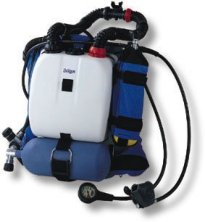
The Dolphin is a semiclosed rebreather for use with nitrox. It uses a constant mass flow dosing system which includes an additional demand bypass. Depending on which nitrox mixture you are using there are different orifices to set the rate of flow. The loop has a total volume of approximately 10.5 litres and depending on your individual lung volume and the adjustment of the pressure relief/dump valve the volume can be varied by 4.5 to 7.1 litres. The scrubber holds approx. 2.25 kg of absorbent. It comes with either a 4 or 5 litre 200bar steel cylinder and a separate 2 L, 200bar open circuit bailout cylinder. It is 520mm long, 370mm wide and 235mm deep. On land it weighs approx. 17kg and in water is about 1 kg negative.
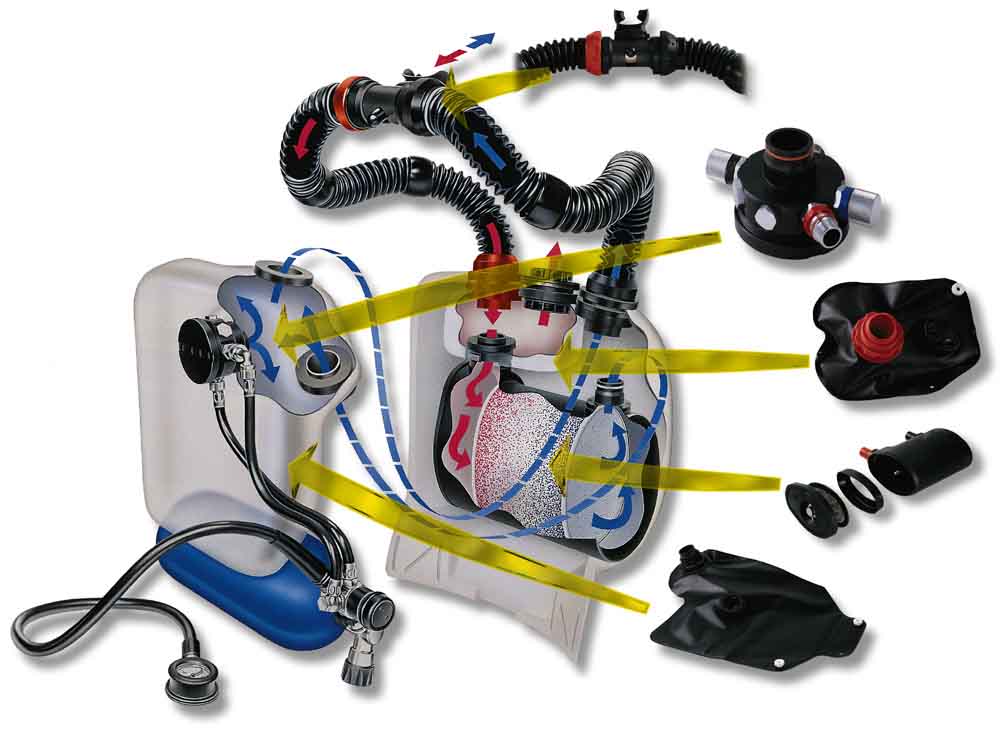
There have been a few small changes in the Dolphin compared to the Atlantis. The first thing you might notice is the different BCD and technical style harness that comes with it. Also, the loop components are now color coded so that red fittings are for exhaled gas flow and blue fittings for inhaled gas flow. The breathing bags are made of a sturdier looking black coated fabric material compared to the BCD bladder type material that was in the Atlantis. The bags also have small water drains at the bottom so they can be drained after the dive and for cleaning/drying.
They have retained the 'muffler' looking scrubber. I questioned the engineer as to the reason behind this design and he replied it was so it would fit in the backplate. I asked about the effects of this shape on gas flow and breakthrough/channeling and he claimed there was little difference to a cylindrical scrubber design. All scrubbers are prone to some channeling along a flat surface. The scrubber has inserts that stop gas flowing directly along the walls to reduce channeling. These result in an L shaped fitting with the bottom of the L protruding into the absorbent bed. Gas flow is diverted by the protrusion from flowing directly along the walls however for every benefit in rebreather design there is always a trade off. In this case it is that the protrusion into the scrubber bed reduces the area of gas flow through the scrubber at these points. Considering this unit is solely for 'recreational' diving depths the effect on work of breathing should not be too noticeable.
The Dolphin is probably the most popular rebreather on the market today and certainly the most accessible. In Australia and the Pacific region it is one of the few RBs, besides a few homebuilt units, that is being dived on a regular basis for recreational or non-professional dives. As with all rebreathers thorough training on the particular unit is required for safety and while these units are for recreational diving a recreational divers usual lax attitude to safety is dangerous when using any rebreather. ALWAYS go through ALL recommended pre-dive checks and seek proper training and advice from the manufacturer.
Drager Australia can be contacted on 1800 67 77 87 if you require further information about purchasing or training on the Dolphin.
Any A.A.R.G. members that need absorbent should contact Paul Davis at Drager Australia who tells me that they have a product called Divesorb Pro available. This is basically a high grade of the Dragersorb 400 and comes only in a 5l (4.5kg) container @ $40.00 ea. Freight is added ex-Melbourne. It is also available from their distributors at around the same price. Paul mentioned that this is the current Military preferred product and they go for the 5l only now as it keeps fresher and reduces danger to contamination or exposure. Paul Davis can be contacted at Drager Australia Pty Ltd 6/7-9 Kent Road Mascot NSW Click here to email Paul
Paul also informed me that the purple color indicator used in some absorbents can be dangerous. Part of the chemical process for the colour indicator is that when wet it gives off an ammonia gas. Now ammonia is a dangerous gas as the nose becomes de-sensitized quickly if introduced slowly and you can get dangerous short term exposures without even know of this. Drager will not supply nor recommend this to anyone and colour indicators should be avoided wherever possible.
Ask the A.A.R.G.

Click here to go  Back to Main Page
